Synopsis Definition: What Is a Synopsis and How Do You Write One?
If you are looking for a clear synopsis definition, start here: a synopsis is a brief but complete summary of a work, usually a book, film, or show. Merriam-Webster defines synopsis as “a condensed statement or outline,” while Cambridge defines it as a short description of the contents of something such as a film or book.
But that basic definition only gets you part of the way. In publishing, a synopsis is not just a casual summary. It is a practical document used to explain the entire book including major plot turns and the ending to someone who needs to evaluate the manuscript quickly. The benchmark article makes this distinction clearly: the kind of synopsis authors usually need for submissions is different from the short teaser you might see on a retailer page or streaming platform.
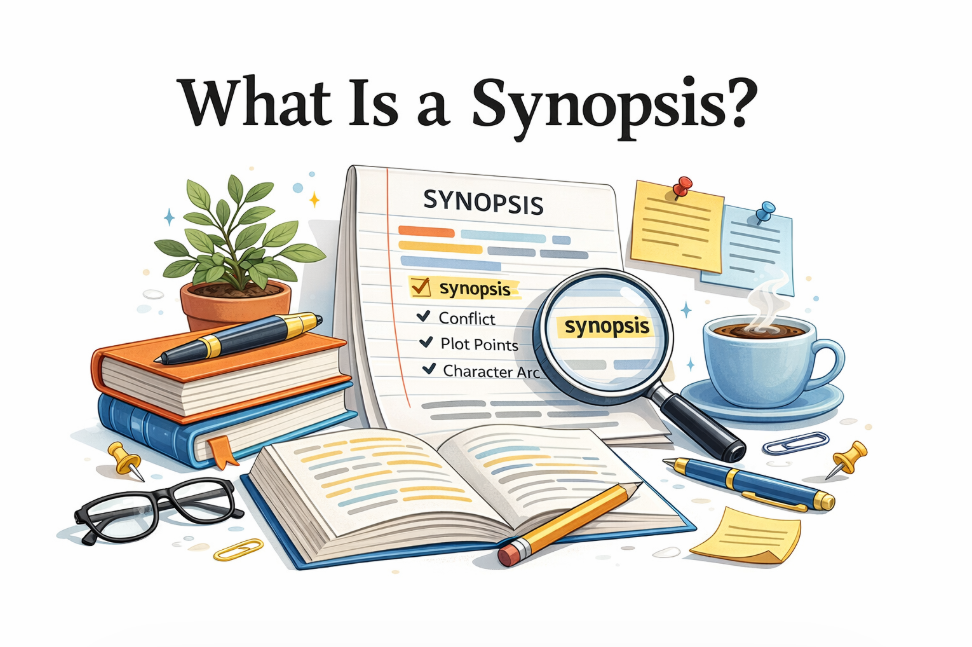
What Is a Synopsis?
A synopsis is a concise but thorough overview of a story or nonfiction work. In fiction, it should cover the main conflict, major plot points, character arc, and resolution. In nonfiction, it should explain the central question or promise of the book and how the book answers or develops it. The benchmark page describes it as a brief yet thorough description of a piece of work that includes the major conflict, plot points, character arc, story arc, setting, themes, major characters, genre, and style.
So if you are asking what is a synopsis, what is synopsis, or what does synopsis mean, the most useful answer is this: a synopsis is the complete short version of the work, not the sales version. It is built to inform, not tease.
Synopsis vs. Blurb: What’s the Difference?
This is one of the most important distinctions in the benchmark article, and it is also one of the most misunderstood.
A blurb is written to sell the book. A synopsis is written to explain the book. A blurb creates intrigue and leaves things out on purpose. A synopsis includes spoilers, major turning points, and the ending because its job is to show the full structure of the story. The benchmark page explains this difference directly and treats it as the first thing authors need to get straight before writing one.
That is why synopsis vs summary and difference between synopsis and summary searches can be confusing. In everyday speech, people use “summary” and “synopsis” loosely. In publishing, though, a synopsis is usually more specific: it is a submission document that covers the whole work from beginning to end in a compact, readable form. That is also why it differs from jacket copy, retailer descriptions, and blurbs.
Why Do Authors Need a Synopsis?
The benchmark page makes the purpose very clear: literary agents and publishers use a synopsis to understand what the book is about without reading the entire manuscript first. If the synopsis works, they are more likely to move on to your sample pages and, eventually, the full manuscript.
That means a synopsis matters most when you are pursuing:
- traditional publishing
- hybrid publishing
- agent submissions
- some contests, mentorships, or pitching situations
If you are self-publishing only, you may never need one in the formal submission sense. But if you are querying, the synopsis is often one of the first documents standing between your manuscript and a serious read.
How Long Should a Synopsis Be?
One of the most practical details in the benchmark page is length guidance. Some agents want very short synopses, around 500 words, while others may expect something closer to 800 to 1,000 words. The source advises authors to have both a shorter version and a longer version ready, which is smart because submission requirements vary.
A good rule is:
- keep a short version for tight submission forms
- keep a fuller version for agents or publishers who want more detail
So if you are asking for the best working length, the answer is not one exact number. It is: write to the submission requirement, but keep multiple versions prepared.
What to Include in a Synopsis
This is the core checklist, and it is one of the strongest parts of the benchmark article.
A strong synopsis should include:
- the five Ws: who, what, where, when, and why
- the major plot points
- the inciting incident
- major roadblocks and rising action
- the climax
- the resolution
- the protagonist’s character arc
- enough voice and style to reflect the tone of the book
The benchmark page specifically says literary professionals usually expect the five Ws, the major plot points, the character arc, and a sense of voice/style. If those pieces are missing, the synopsis becomes much weaker as a submission tool.
That matters because a synopsis is not just a plot checklist. It also needs to show why the story works.
How to Write a Synopsis
The benchmark page breaks the writing process into five steps. That structure is useful, and it should stay.
Step 1: Write Everything Down
Start by listing the key elements:
- the five Ws
- the major plot points
- the character arc
Do not worry about polish yet. The goal at this stage is to get the full skeleton of the story onto the page so you can shape it later. The benchmark advice here is simple and good: write everything down first, then work toward brevity. It also stresses a rule that matters throughout the process: in a synopsis, the job is to tell, not show.
Step 2: Start with the Ordinary World and the Inciting Incident
A strong opening synopsis paragraph usually introduces the protagonist’s ordinary world and then quickly moves into the inciting incident. The benchmark page says this should happen within two or three sentences, and it also notes that synopses are normally written in third person and present tense, even if the novel itself is written differently.
That means your opening should not wander. It should establish who the story is about, what their situation is, and what happens that knocks the story into motion.
Step 3: Focus on Conflict, Stakes, and Change
The middle of your synopsis should cover the major obstacles, the pressure building around the protagonist, the antagonist or opposing force, and the character changes that happen along the way. The benchmark page calls this the place to spend time on roadblocks and character, and it is right to emphasize both. A flat plot summary without character movement usually feels dead on arrival.
This is also where you include the major twists that genuinely matter. You do not need every scene, but you do need the turns that explain why the story develops the way it does.
Step 4: Give Away the Ending
This is where many writers hesitate, but the benchmark article is explicit: do not hold anything back. A submission synopsis is supposed to include the ending. That means the climax, the final outcome, and a brief resolution all belong in the document.
So if you are still wondering whether a synopsis should include spoilers, the answer is yes. It should.
Step 5: Revise, Cut, and Repeat
The benchmark page recommends writing a draft, setting it aside, trying another version, and revising until the language is tighter and the voice still comes through. That is solid advice. A synopsis almost always improves when you cut repetition, simplify phrasing, and make cause-and-effect connections sharper.
In practice, this usually means:
- trimming unnecessary side details
- checking that the plot flow is easy to follow
- making sure the protagonist’s motivation stays visible
- shortening wherever a line is doing too much work

|
From Synopsis to Submission-Ready Manuscript Levon is an all-in-one author workspace built for the whole journey — draft your story, shape its structure and export a polished manuscript once your synopsis lands you the request. Get Early Access to Levon → |
Best Formatting Practices for a Synopsis
The benchmark page includes several practical formatting conventions that authors should not miss.
A clean submission synopsis should usually:
- follow the agent or publisher’s specific submission guidelines
- use a professional font
- include your title and the word “Synopsis” at the top
- include your name
- stay readable and uncluttered
The article even notes that some agents prefer single-spaced Times New Roman 12-point, while others want different formatting. That detail matters because a strong synopsis can still underperform if it ignores instructions.
So the real rule is simple: follow the submission guidelines first, then apply general best practices.
Practical Tips That Make a Synopsis Better
The benchmark page includes several small but valuable tips that are easy to miss if you only skim it.
Use third person and present tense
This is the standard convention for most novel synopses, and the benchmark page states it directly.
Make character names easy to spot
The benchmark page recommends putting character names in bold or capitalizing them on first introduction so the reader can follow the synopsis more easily.
Limit the number of named characters
The source suggests sticking to four or five named characters and referring to smaller secondary characters by role instead. That is strong advice because too many names make a synopsis muddy fast.
Keep the writing clean, not flashy
A synopsis is not the place for ornamental prose. It still needs voice, but clarity matters more than stylistic fireworks. The benchmark page makes this point indirectly by stressing brevity, tell-don’t-show writing, and clean progression through the story.
What a Good Synopsis Actually Sounds Like
The benchmark page uses Die Hard as an example, opening with JOHN MCCLANE in his ordinary world before the Christmas Eve hostage crisis interrupts it. That example works because it immediately establishes:
- the protagonist
- the setting
- the ordinary-world tension
- the inciting incident
- a hint of the arc to come
That is exactly what a good synopsis should do. It should move fast, stay specific, and show the shape of the story without sounding like marketing copy.
Common Mistakes to Avoid
A weak synopsis usually fails for one of a few predictable reasons:
- it reads like a teaser instead of a full explanation
- it leaves out the ending
- it focuses too much on side plots
- it introduces too many named characters
- it loses the protagonist’s motivation
- it gives plot points without showing the character arc
- it ignores submission requirements
The benchmark article does not group these as a single “mistakes” list, but all of them are implied by its guidance on what to include, what to cut, and how to format the document.
FAQ
What is a synopsis?
A synopsis is a brief but complete summary of a work. In publishing, it usually means a submission document that outlines the whole story, including major plot points and the ending.
What does synopsis mean?
The word synopsis means a condensed statement or outline — essentially a short, organized overview of the main content.
Define synopsis
To define synopsis simply: it is a concise explanation of the full work, not just a teaser or sales description.
What is a synopsis for a novel?
For a novel, a synopsis is a compact summary of the entire plot, major conflict, character arc, and ending, usually written for agents or publishers.
Should a synopsis include spoilers?
Yes. A submission synopsis should include major spoilers, the climax, and the ending.
What is the difference between a synopsis and a blurb?
A blurb is designed to sell the book and create intrigue. A synopsis is designed to explain the whole book and therefore includes spoilers.
How long should a synopsis be?
It depends on submission requirements, but the benchmark article says some are as short as 500 words, while others run 800 to 1,000 words. It is smart to keep both a shorter and longer version ready.
Final Takeaway
The clearest synopsis definition is this: a synopsis is the complete short version of your story, written to inform rather than entice.That is the key difference behind searches like what is a synopsis, what is synopsis, synopsis definition, define synopsis, what does synopsis mean, and what is the synopsis of a book. A strong synopsis gives the full shape of the work, highlights the main conflict and character arc, and shows the ending without trying to hide anything. It is not a blurb, not jacket copy, and not just a vague outline. It is a practical submission document, and when it is done well, it opens the door to the rest of your manuscript.