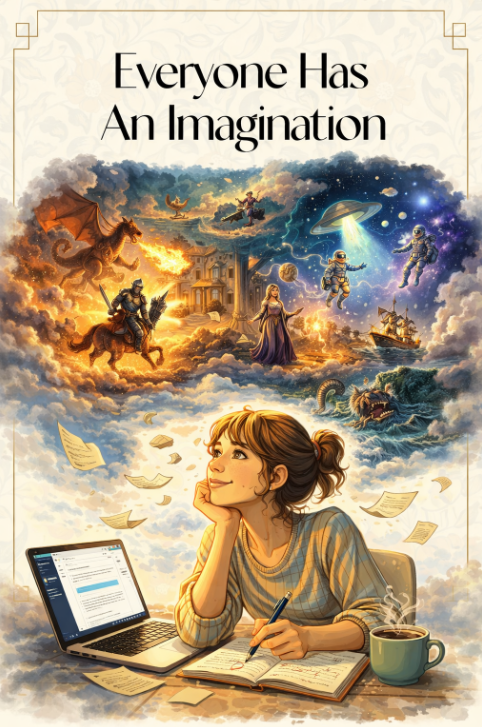
500 Creative Writing Prompts: The Ultimate Collection of Story Ideas for Writers
Every writer eventually reaches the same uncomfortable moment: the page is empty, the cursor is blinking, and despite wanting desperately to write, you have absolutely no idea what should happen next.
If you’re asking what should I write about, you don’t necessarily need a fully formed plot. Sometimes you need only one strange situation. One character. One secret. One sentence. One impossible question.
That’s exactly what good writing prompts provide.
The best creative writing prompts don’t tell you what story to write. They open a door and let your imagination decide what exists on the other side.
Below you’ll find 500 original writing prompts covering everything from literary fiction and romance to horror, fantasy, science fiction, mystery, comedy, dialogue, experimental storytelling, and short narrative writing prompts.
Whether you’re searching for story ideas, things to write about, short story ideas, topics to write about, story starters, writing prompts for adults, or simply something unusual enough to get you writing again, start anywhere.
You don’t have to begin at Prompt #1. Find the idea that makes you think: “Wait… what happens next?” Then write until you know.
Contents
- 1–25: Story Starters
- 26–50: Short Story Prompts
- 51–75: Character-Based Writing Ideas
- 76–100: Conflict and Plot-Twist Story Ideas
- 101–125: Mystery and Thriller Writing Prompts
- 126–150: Horror Creative Writing Prompts
- 151–175: Fantasy Prompts for Creative Writing
- 176–200: Science Fiction Fiction Writing Prompts
- 201–225: Romance Story Writing Prompts
- 226–250: Literary and Contemporary Topics to Write About
- 251–275: Historical Creative Writing Ideas
- 276–300: Adventure and Survival Story Prompts
- 301–325: Fun Writing Prompts
- 326–350: Family and Friendship Narrative Ideas
- 351–375: Imaginative and Magical Writing Prompts
- 376–400: Dialogue Writing Practice Prompts
- 401–425: Setting and World-Building Creative Writing Topics
- 426–450: Experimental Creative Writing Exercises
- 451–475: Writing Prompts for Adults and Daily Practice
- 476–500: Unexpected Imaginative Writing Ideas
- How to Use These Writing Prompts
- Can’t Decide? Use the Random Prompt Method
- How to Turn a Writing Prompt Into a Complete Story
- A Simple Formula for Creating Unlimited Story Ideas
- 10 Questions to Make Any Prompt More Original
- Frequently Asked Questions About Creative Writing Prompts
- Final Advice: Stop Looking for the Perfect Idea
How to Use These Writing Prompts
There is no correct way to use a writing prompt. Try one of these approaches.
The 10-Minute Sprint
Choose a prompt and write continuously for ten minutes. Don’t edit. Don’t research. Don’t delete. Just discover the story.
The 500-Word Challenge
Turn one of these short story prompts into a complete story using 500 words or fewer. The limitation forces you to make every scene and sentence matter.
Combine Two Prompts
Pick two numbers randomly. For example: Prompt 17 + Prompt 214. Now both ideas have to exist in the same story. Unexpected combinations often produce the best creative writing ideas.
Change the Genre
Take a romance prompt and write it as horror. Take a murder mystery and turn it into comedy. Take a fantasy prompt and remove every supernatural element. Changing genre can transform familiar story prompts into something completely original.
Reverse the Obvious Answer
If your first thought is “Obviously the husband committed the murder,” make him the only person who could not have done it. Your second or third idea is often more interesting than your first.
Change the Point of View
Write the same prompt from the hero’s perspective, the villain’s perspective, a witness’s perspective, a child’s perspective, an animal’s perspective, or someone who completely misunderstood what happened. A single writing prompt can generate dozens of stories.
1–25: Story Starters
1. A woman receives a birthday card addressed to her from someone who died fifteen years ago.
2. Every morning, someone leaves exactly $100 outside the protagonist’s apartment—with no explanation.
3. A stranger sits beside your character on a train and whispers, “Whatever happens at the next station, don’t get off.”
4. A child comes home from school carrying a photograph of a family nobody recognizes—except the child’s mother.
5. The world’s most famous missing person walks into a small-town café and orders breakfast.
6. Someone wakes to discover every clock in the house has stopped at 3:17 a.m.
7. A character inherits a house under one condition: They must never enter the upstairs bedroom.
8. During a wedding ceremony, someone in the audience stands and says, “Before you marry him, you need to see this.”
9. A character receives an email from their own address dated exactly one year in the future.
10. An elderly stranger approaches your protagonist and says, “I’ve been looking for you since 1974.”
11. A suitcase appears outside an apartment. Inside are clothes that fit the protagonist perfectly—and a passport bearing their photograph but a different name.
12. At a funeral, the supposedly dead person sends everyone in attendance a text message.
13. A character opens their front door and finds a younger version of themselves standing outside.
14. Every person in a town wakes from the same dream.
15. A woman buys a used book and discovers someone has written detailed notes about her life in the margins.
16. A man discovers that somebody has been secretly paying his rent for seven years.
17. A character wakes up famous but has no idea what they supposedly did to become famous.
18. During a power outage, every house on the street goes dark except one that has supposedly been abandoned for decades.
19. A stranger returns a wallet your protagonist hasn’t lost yet.
20. A character finds a handwritten list titled “People Who Will Disappear This Week.” Their name is last.
21. Someone receives a voicemail consisting entirely of their own voice begging them not to answer the door.
22. A couple discovers an extra room in their home that neither remembers existing.
23. A character’s new neighbor knows details about their childhood that were never publicly known.
24. A man walks into work on Monday morning and discovers nobody remembers hiring him.
25. Your protagonist receives an invitation to a reunion for a school they never attended.
26–50: Short Story Prompts
These short story prompts are designed to create a complete conflict quickly, making them useful for flash fiction and short fiction prompts.
26. A locksmith receives a call asking them to open a door—from someone trapped on the outside.
27. Two strangers discover they have been receiving each other’s dreams.
28. A teacher realizes one student’s fictional story predicts events before they happen.
29. A person has twenty-four hours to spend a million dollars but is forbidden from giving any of it away.
30. A taxi driver picks up the same passenger every night—although the passenger died last week.
31. Someone finds a wedding ring inside a loaf of bread.
32. Two rival chefs discover they must operate the same restaurant for one night.
33. A person accidentally sends a brutally honest text to the person it was written about.
34. Someone is paid to attend a stranger’s funeral and pretend they were best friends.
35. A small-town librarian notices someone borrowing books in an order that spells out a warning.
36. A character gets stuck in an elevator with the one person they have spent years avoiding.
37. A child decides to interview every adult in town about the same unsolved mystery.
38. A thief breaks into a house and discovers the owner has been waiting for them.
39. An actor hired to portray a missing person becomes convinced that the missing person is still alive.
40. A character wins a vacation to a town that doesn’t appear on any map.
41. Someone finds an apology letter addressed to them for something that hasn’t happened yet.
42. Two passengers accidentally exchange identical-looking bags at an airport.
43. A character’s lie becomes true the next morning.
44. A stranger offers someone $10,000 to deliver an unopened envelope across town.
45. A person agrees to housesit and discovers the owner has left instructions for feeding something that isn’t a pet.
46. A man learns that someone has been impersonating him online—and living a better version of his life.
47. A character discovers that their childhood imaginary friend belongs to someone else’s childhood too.
48. During a family dinner, someone proposes a game where everyone must tell one secret.
49. A person wakes on a deserted beach with a hotel key in their pocket.
50. Two enemies are the only people who remember that yesterday happened twice.
51–75: Character-Based Writing Ideas
Great stories often begin with people rather than plots. Use these writing ideas to build memorable characters.
51. Write about a professional liar who suddenly becomes incapable of lying.
52. Create a character who remembers every insult anyone has ever directed at them.
53. Write about someone universally loved who secretly believes they are a terrible person.
54. Create a villain who is correct about the story’s central problem but horrifyingly wrong about the solution.
55. Write about a person whose greatest talent is something they are ashamed of.
56. Create a character who desperately wants fame but panics whenever anyone recognizes them.
57. Write about someone who keeps a notebook recording every promise they have ever made.
58. Create a character who has spent their entire life preparing for an event that never happens.
59. Write about an optimist whose predictions are almost always wrong.
60. Create a pessimist who inexplicably brings good luck to everyone around them.
61. Write about someone who cannot forgive a person who genuinely deserves forgiveness.
62. Create a character who is excellent at giving advice but incapable of following it.
63. Write about the nicest person in town on the worst day of their life.
64. Create someone who has built their identity around being needed—and suddenly nobody needs them.
65. Write about a coward who becomes the only person available to do something courageous.
66. Create a detective who is brilliant at understanding crimes but terrible at understanding people.
67. Write about someone who has always been the family disappointment and suddenly becomes its only hope.
68. Create a character obsessed with controlling everything who encounters something completely uncontrollable.
69. Write about a famous motivational speaker who has secretly lost all hope.
70. Create someone who discovers their worst enemy has been anonymously helping them for years.
71. Write about a person who believes everyone deserves a second chance except themselves.
72. Create twins who have spent their lives pretending to be identical despite being completely different people.
73. Write about a therapist who begins suspecting that several unrelated patients are describing the same person.
74. Create someone who has never broken a rule and suddenly discovers the rules are wrong.
75. Write about a character whose greatest strength becomes their greatest weakness.
76–100: Conflict and Plot-Twist Story Ideas
Use these story ideas when your draft needs tension.
76. Two people competing for the same promotion discover the company intends to fire them both.
77. A character learns the person blackmailing them is protecting them from something worse.
78. Someone spends years hunting the person responsible for ruining their life, only to discover they saved it.
79. A character wins exactly what they wanted and immediately realizes it was a mistake.
80. A detective discovers the victim deliberately arranged their own murder investigation.
81. Someone escapes a dangerous cult and discovers their family wants them to return.
82. A hero defeats the villain only to discover the villain was preventing a greater catastrophe.
83. A character exposes a huge conspiracy and nobody cares.
84. Someone discovers the person they are supposed to rescue doesn’t want to be rescued.
85. Two people fake a rivalry while secretly working together—until one actually betrays the other.
86. A character learns that everyone has been lying to them for compassionate reasons.
87. Someone receives proof that their strongest memory never happened.
88. The protagonist catches the antagonist committing a crime, but exposing it would destroy an innocent person’s life.
89. A character discovers their carefully planned revenge will hurt the wrong person.
90. Someone finally confesses a decades-old secret only to learn everyone already knew.
91. A witness changes their story because the original version was true.
92. The hero discovers the person they trusted most was manipulating them—but for a good reason.
93. Someone spends years trying to leave their hometown and then becomes the only person capable of saving it.
94. A character is offered everything they want in exchange for abandoning the person who needs them most.
95. Two families have hated each other for generations, but nobody remembers why.
96. The protagonist learns their biggest failure was deliberately engineered to protect them.
97. Someone who believes they witnessed a murder discovers they witnessed a rescue.
98. A character finally uncovers the truth and wishes they hadn’t.
99. Someone discovers that winning the competition is actually the punishment.
100. The protagonist learns that the person everyone calls the villain has been telling the truth from the beginning.
101–125: Mystery and Thriller Writing Prompts
101. A detective receives photographs of crime scenes that haven’t happened yet.
102. Seven strangers receive identical keys but nobody knows what they open.
103. A journalist investigating a missing-person case discovers every witness gives exactly the same sentence as an answer.
104. Someone breaks into a police evidence room to return something.
105. A murderer leaves apologies instead of clues.
106. A character discovers that five unrelated missing people all visited the same restaurant before disappearing.
107. A woman sees her own photograph on a missing-person poster under another name.
108. A detective realizes the suspect knows information that only the detective should know.
109. Someone receives a package containing an object stolen from them twenty years ago.
110. A town’s oldest resident disappears on their 100th birthday.
111. A private investigator is hired to discover whether their client actually exists.
112. A man reports his wife missing. The police insist he has never been married.
113. Someone discovers a hidden camera in their home containing footage recorded before they moved in.
114. A journalist receives anonymous documents exposing a scandal—signed with their own name.
115. A detective finds the same fingerprint at crimes committed fifty years apart.
116. Someone witnesses a kidnapping, but the supposed victim later denies being taken.
117. A mysterious caller knows exactly where the protagonist is at all times.
118. A witness identifies the murderer as someone who died before the crime occurred.
119. A hotel guest disappears from a locked room, leaving behind a perfectly packed suitcase.
120. A character discovers that a childhood game was actually designed to hide evidence.
121. Someone realizes every victim in an unsolved case has the same birthday.
122. A detective investigating anonymous threats discovers they wrote one of them themselves.
123. A famous unsolved murder is recreated perfectly—except for one deliberate difference.
124. Someone discovers an abandoned car containing photographs of their house.
125. A criminal confesses to a murder that hasn’t been discovered.
126–150: Horror Creative Writing Prompts
126. Every photograph taken inside a particular house includes the same unfamiliar child.
127. A babysitter hears footsteps upstairs after confirming the child is asleep beside them.
128. Someone discovers that their reflection is becoming slower each day.
129. A family moves into a house where one room is always several degrees colder than the rest.
130. A voice assistant begins answering questions nobody asked aloud.
131. A character notices the moon is getting slightly larger every night.
132. Someone keeps dreaming about a door. One morning, the door appears in their bedroom.
133. Every night at 2:11 a.m., someone knocks from inside the closet.
134. A woman receives a phone call from her mother while standing at her mother’s funeral.
135. A child insists there is someone under the bed—and whatever is under the bed insists the child isn’t really the child.
136. A character finds hundreds of photographs showing themselves sleeping.
137. Everyone in a town refuses to look toward the forest after sunset.
138. Someone notices that people who enter a certain grocery aisle never return.
139. A family discovers that the previous owners left detailed instructions for surviving each night.
140. A person begins hearing a second set of footsteps matching their own.
141. The newest grave in a cemetery bears tomorrow’s date and the protagonist’s name.
142. Every mirror in a hotel reflects the same empty room.
143. Someone wakes to discover every door and window in their house has been nailed shut—from the inside.
144. A radio station broadcasts the names of people who will die the following day.
145. A character finds a tooth beneath their pillow despite not losing one.
146. A town celebrates an annual festival but refuses to explain what happens to the winner.
147. Someone hears their dead sibling singing from the basement.
148. A child draws pictures of strangers shortly before those strangers arrive.
149. Every person in a neighborhood receives the same note: “Do not let it know you’re awake.”
150. A character realizes the monster everyone fears is hiding from something else.
151–175: Fantasy Prompts for Creative Writing
151. Magic exists, but every spell permanently erases one memory.
152. A kingdom chooses its ruler by allowing a dragon to decide who is worthy.
153. A thief steals a crown and discovers it refuses to leave their head.
154. Everyone receives one magical gift at age eighteen. Your protagonist receives nothing—or appears to.
155. A healer can cure any illness by transferring it into themselves.
156. A city moves to a different location every midnight.
157. A blacksmith discovers that weapons they forge remember everyone they kill.
158. A princess escapes an arranged marriage by hiring the dragon supposedly sent to kidnap her.
159. A wizard’s most powerful spell accidentally creates a new god.
160. Every lie told within the kingdom physically appears somewhere.
161. A farmer discovers a tiny civilization living beneath the roots of an ancient tree.
162. Magic is illegal because it attracts something from another world.
163. A knight learns the prophecy they have spent their life fulfilling was deliberately forged.
164. A child befriends the monster their village sacrifices people to.
165. A mapmaker discovers that drawing a place causes it to exist.
166. A queen can hear every prayer addressed to her.
167. A witch offers people exactly what they ask for—not necessarily what they mean.
168. The world’s last dragon applies for a job in a bakery.
169. A prince discovers the sword proving his royal blood has chosen someone else.
170. A village wakes to discover the surrounding mountains have moved.
171. A librarian guards books containing every spell nobody should ever cast.
172. A magician can see curses as physical objects hanging from people.
173. A kingdom where nobody can die faces its first murder.
174. Every century, the sea returns something civilization thought lost forever.
175. A hero reaches the end of a legendary quest and discovers there was never supposed to be a hero.
176–200: Science Fiction Fiction Writing Prompts
176. Humans discover an alien civilization whose archaeological museums contain artifacts from Earth.
177. Everyone receives the exact date they will die—except one person.
178. A spacecraft receives a distress signal transmitted by itself twenty years in the future.
179. Memory editing becomes affordable enough for ordinary people.
180. Scientists discover that dreams are transmissions rather than imagination.
181. A robot becomes convinced its human owner is behaving too mechanically.
182. Earth receives a message from extraterrestrial life consisting of one word: “Run.”
183. Teleportation becomes possible, but nobody knows what happens to the original body.
184. An astronaut returns from Mars younger than when they left.
185. Humanity learns that the universe is far smaller than anyone imagined.
186. Every person receives an AI assistant at birth that knows their likely future.
187. An android commits the first crime motivated entirely by jealousy.
188. Scientists discover a planet identical to Earth except that its civilization is one day ahead.
189. Someone’s digital clone refuses to be deleted.
190. A company sells artificial memories of vacations customers never took.
191. Aliens arrive on Earth looking for an extinct species humans considered insignificant.
192. Time travel exists but can only move someone exactly sixty seconds backward.
193. A person discovers their smart home is secretly communicating with other houses.
194. Human emotions become downloadable.
195. A spacecraft carrying humanity’s last survivors discovers another human spacecraft that left Earth centuries earlier.
196. Scientists successfully upload consciousness but cannot determine whether the uploaded person is conscious.
197. The first human born on Mars wants to move to Earth.
198. A civilization builds a machine capable of answering one question truthfully.
199. An AI designed to predict crimes identifies its creator as humanity’s greatest future threat.
200. After decades searching for alien intelligence, humanity discovers Earth has been deliberately quarantined.
201–225: Romance Story Writing Prompts
201. Two people who anonymously correspond online discover they compete against each other at work.
202. A wedding planner falls in love with someone whose wedding they are organizing.
203. Two former childhood enemies inherit equal ownership of the same house.
204. Someone hires a stranger to pretend to be their partner at a reunion—and the stranger takes the role far too seriously.
205. Two passengers repeatedly meet because their flights are always delayed at the same airport.
206. A divorce lawyer falls in love with a marriage counselor.
207. Someone receives love letters intended for the apartment’s previous tenant and becomes determined to find the writer.
208. Two rival bookstore owners are forced to organize the town’s literary festival together.
209. A chef and a food critic fall in love before discovering each other’s professions.
210. Two people agree to go on one terrible date so their families stop trying to match them.
211. Someone falls for the anonymous person leaving encouraging notes inside library books.
212. Two former partners discover their best friends are marrying each other.
213. A photographer accidentally takes the same stranger’s picture in five different countries.
214. Two people meet every year on the same date but never communicate between meetings.
215. A musician writes a hit love song about someone they claim doesn’t exist.
216. Someone inherits a romantic letter that was never delivered fifty years earlier.
217. Two neighbors communicate entirely through notes because they work opposite schedules.
218. A person finds a list their late spouse made titled “Reasons You Should Fall in Love Again.”
219. Two competitive wedding guests fake a romance to win a ridiculous family bet.
220. Someone returns to their hometown and discovers their teenage crush now owns the business next door.
221. A famous actor falls for the only person in town who doesn’t recognize them.
222. Two people accidentally book the same remote cabin for the same week.
223. A translator realizes the diplomat they’re translating for keeps deliberately mistranslating declarations of affection.
224. Someone agrees to help their best friend win a date and gradually realizes they want the date themselves.
225. Two people discover their grandparents once wrote love letters to each other but never married.
226–250: Literary and Contemporary Topics to Write About
226. Write about siblings clearing out their childhood home after the death of a parent.
227. A woman attends the retirement party of a teacher who changed her life but doesn’t remember her.
228. Someone returns a borrowed object thirty years late.
229. A family gathers for dinner after one member unexpectedly becomes famous.
230. Write about someone realizing they have become exactly like the parent they promised never to resemble.
231. A character finds an old list of everything they expected to accomplish by their current age.
232. Two former best friends unexpectedly meet in a hospital waiting room.
233. A family tradition continues even though nobody remembers how it began.
234. Someone spends years saving for a dream and loses interest just as they can finally afford it.
235. A parent discovers their adult child remembers childhood completely differently.
236. Write about a friendship that survives only because both people avoid discussing one event.
237. Someone learns that a stranger has been visiting their father’s grave every week.
238. A retired person discovers that freedom is lonelier than expected.
239. Write about a character returning to a neighborhood transformed beyond recognition.
240. A woman discovers her mother kept every letter she claimed never to receive.
241. Someone secretly attends the funeral of a person they haven’t spoken to in decades.
242. Write about a person who realizes they are happier after failing.
243. A character has to decide what to do with an inheritance they believe they don’t deserve.
244. Someone discovers the childhood story their family tells about them isn’t true.
245. Two adults compare their memories of the same teacher and describe completely different people.
246. Write about a person apologizing sincerely for the first time.
247. Someone receives an invitation from a former friend they betrayed.
248. A family photograph contains a person nobody will identify.
249. Write about someone learning their parents had an entire life before becoming parents.
250. A character realizes the person they envy is secretly envious of them.
251–275: Historical Creative Writing Ideas
251. A servant overhears a conversation that could change the outcome of a war.
252. Two soldiers on opposing sides discover they were childhood friends.
253. A printer secretly publishes banned political pamphlets at night.
254. A young woman disguises herself to study a profession forbidden to her.
255. A sailor arrives home after years away and discovers everyone believed they were dead.
256. A portrait painter realizes an influential client is hiding a dangerous secret.
257. A messenger must deliver a letter that could prevent a battle.
258. An archaeologist in the 1920s discovers an artifact that challenges everything their sponsor believes.
259. A family running an inn shelters someone pursued by the authorities.
260. A doctor during an epidemic must choose between accepted medicine and a controversial new theory.
261. A person condemned as a witch actually has no magical ability whatsoever.
262. A young journalist witnesses an event that history will later describe incorrectly.
263. Someone invents something centuries before society is ready for it.
264. A royal food taster suspects the king is poisoning himself deliberately.
265. Two people exchange secret letters during wartime without ever meeting.
266. A librarian saves forbidden books from destruction.
267. A photographer captures something in the background of a historic image that nobody notices for decades.
268. An immigrant arrives in a new country carrying a secret about the family they left behind.
269. A person survives a famous disaster only because they committed a minor crime.
270. A child working in a factory begins secretly documenting the conditions.
271. A musician is ordered to perform for an enemy occupying their city.
272. An aristocrat and servant secretly exchange identities for one week.
273. A translator deliberately changes one sentence during crucial peace negotiations.
274. A village learns that the approaching army includes someone believed dead.
275. Write a famous historical event from the perspective of an ordinary person who doesn’t yet realize it will become history.
276–300: Adventure and Survival Story Prompts
276. A hiking group discovers a staircase in the middle of an untouched forest.
277. A pilot makes an emergency landing somewhere that shouldn’t exist.
278. Two rivals become stranded together after a competition goes disastrously wrong.
279. An explorer finds evidence that someone reached an “undiscovered” place decades earlier.
280. A character lost at sea begins receiving radio transmissions from beneath the water.
281. A survival expert gets stranded with someone who has never spent a night outdoors.
282. A climber discovers an abandoned camp near a summit nobody has supposedly reached.
283. A treasure map points to somewhere inside a modern city.
284. A cruise ship wakes to discover every passenger has disappeared except twelve people.
285. An adventurer searching for a legendary city discovers its inhabitants desperately want to remain hidden.
286. Someone trapped underground hears knocking from the other side of a wall.
287. A character survives a plane crash and finds another crashed plane nearby—from decades earlier.
288. A team crossing a desert discovers a working telephone booth.
289. A deep-sea expedition discovers artificial lights far below the known ocean floor.
290. An explorer’s compass begins pointing toward a person instead of north.
291. A traveler must cross a dangerous region while protecting an object they aren’t allowed to open.
292. A group enters a cave and exits in a different country.
293. A sailor discovers an island appearing on no satellite image.
294. Someone attempting to break a world record discovers evidence the previous record holder cheated for a terrifying reason.
295. A rescue team realizes the missing hikers deliberately don’t want to be found.
296. A traveler becomes trapped inside an airport during a mysterious global shutdown.
297. Two strangers must cross a frozen wilderness after discovering they are the only survivors of separate accidents.
298. An expedition discovers its guide has never actually visited the destination.
299. A character follows coordinates tattooed on their late father’s arm.
300. An adventurer reaches the treasure and realizes bringing it home would be catastrophic.
301–325: Fun Writing Prompts
Sometimes the best cure for writer’s block is simply to stop taking the story too seriously. Try these fun writing prompts.
301. A supervillain’s mother insists they invite the superhero to Thanksgiving dinner.
302. A ghost becomes frustrated because the new homeowner refuses to be scared.
303. Someone accidentally becomes mayor after entering an election as a joke.
304. A vampire develops a severe fear of blood.
305. A professional assassin discovers their next target is already trying to hire them.
306. Aliens invade Earth but become obsessed with reality television.
307. A dragon hires a financial adviser to manage its treasure.
308. Someone’s dog becomes internet-famous and earns more money than they do.
309. A magician accidentally reveals that one “trick” is genuine magic.
310. The world’s worst detective somehow solves every case.
311. A person is cursed so every exaggeration they make immediately becomes true.
312. Two ghosts argue over who has the right to haunt the same house.
313. A superhero’s greatest challenge is passing their driving test.
314. Someone receives a call from their future self asking to borrow money.
315. A medieval knight accidentally appears at a modern corporate retreat.
316. A fortune teller is annoyed because one customer’s future keeps changing.
317. The Grim Reaper shows up at the wrong address and is too embarrassed to leave immediately.
318. A genie is exhausted by people asking for the same three wishes.
319. A supercomputer designed to solve humanity’s problems becomes addicted to online chess.
320. A secret agent’s cover identity becomes more successful than their actual career.
321. Someone’s imaginary childhood friend returns demanding repayment of an old debt.
322. A person discovers their cat has been maintaining a second family two streets away.
323. A family discovers their grandmother has secretly been competing in professional wrestling.
324. A man joins a support group and realizes everyone else is a supernatural creature.
325. Two arch-enemies accidentally book adjoining rooms on vacation.
326–350: Family and Friendship Narrative Ideas
326. Two estranged siblings must complete their father’s unusual final requests together.
327. A child begins secretly interviewing grandparents about the parts of family history nobody discusses.
328. Four childhood friends open a time capsule and discover something none of them remembers putting inside.
329. A parent realizes their child has been protecting them from bad news.
330. Two lifelong friends discover one has kept a major secret since the day they met.
331. A family road trip is interrupted when someone recognizes a parent under another name.
332. A grandmother disappears from her retirement home for one weekend and refuses to explain where she went.
333. A group of former classmates gathers to honor a teacher and discovers each remembers them differently.
334. A father and adult son accidentally exchange phones for a day.
335. A woman discovers that her childhood “family friend” is actually a relative.
336. Two siblings inherit the family business neither wants to run.
337. A best friend announces an engagement to someone the protagonist distrusts.
338. A child writes letters to an estranged relative without either parent knowing.
339. A family agrees to spend one week without telling a single lie.
340. Three generations of women discover they made the same mistake at the same age.
341. Two cousins compete over who should inherit an emotionally valuable but financially worthless object.
342. Childhood friends recreate one photograph every year until someone stops appearing.
343. A parent discovers their child secretly returned something the parent stole years earlier.
344. Two friends who promised to travel the world together finally take the trip forty years later.
345. A family reunion is disrupted when a stranger arrives claiming to belong there.
346. Someone discovers their sibling has been anonymously defending them online for years.
347. Two former best friends accidentally become neighbors.
348. A child creates a family tree and uncovers a branch everyone omitted.
349. A character must decide whether to reveal a family secret that could heal one relationship and destroy another.
350. At a funeral, four strangers each claim the deceased was their best friend.
351–375: Imaginative and Magical Writing Prompts
351. Everyone is born with a small tattoo revealing the emotion they will struggle with most.
352. Forgotten objects gather together somewhere after nobody remembers them.
353. Once a year, everyone can speak to one person they have lost.
354. A town wakes to discover gravity has become optional.
355. A person can see the exact moment when two strangers will fall in love.
356. Every promise creates an invisible thread between the people involved.
357. A woman discovers that every house she dreams about exists somewhere.
358. People’s shadows reveal the decisions they regret most.
359. A child discovers that rain falling on one particular street reverses age.
360. Every lie removes one word from the liar’s vocabulary.
361. People’s memories become visible as small lights floating around them.
362. A bookstore sells books that describe lives readers could have lived.
363. Each person’s reflection ages according to how they feel rather than how old they are.
364. An antique clock can pause time, but only for people who are genuinely happy.
365. Every town has one person who remembers events everyone else forgets.
366. A woman discovers she can hear houses remembering former occupants.
367. Plants grow wherever someone tells the truth after years of lying.
368. Every person is allowed to ask the universe one question on their twenty-first birthday.
369. A letter written with a certain pen always reaches the person who most needs to read it.
370. A café appears only to people who are about to make life-changing decisions.
371. People’s dreams begin leaving physical objects behind.
372. One day every fictional character becomes aware that they are fictional.
373. A child discovers that abandoned imaginary friends live together in an invisible city.
374. Everyone wakes able to see one another’s emotional scars.
375. Once every decade, a door appears that opens onto the life you would have lived after one different decision.
376–400: Dialogue Writing Practice Prompts
376. “Before you get angry, you should know that technically nobody stole the car.”
377. “I wasn’t going to tell you this, but we’re running out of time.”
378. “You look exactly like the person I’m supposed to kill.”
379. “There are three things your mother never told you.”
380. “Whatever you do, don’t say my name.”
381. “I’m sorry, but according to this document, you don’t exist.”
382. “You’re thirty years early.”
383. “I thought you said the house was empty.”
384. “There’s someone sitting in your car.”
385. “I can explain the blood, but not the penguin.”
386. “Please tell me you didn’t press the red button.”
387. “You remember me, don’t you?”
388. “The good news is that I found your brother.”
389. “I need you to pretend we’ve known each other for ten years.”
390. “Nobody has lived in that house since 1986.”
391. “I don’t think that’s our moon.”
392. “The police are going to ask you where I was last night.”
393. “That isn’t the strangest thing I found in your father’s desk.”
394. “You have exactly nine minutes to decide whether you trust me.”
395. “Why is there a horse in the kitchen?”
396. “If that phone rings again, we’re leaving.”
397. “You weren’t supposed to remember yesterday.”
398. “There’s something you should know about the person you’re marrying.”
399. “The letter says I’m responsible for what happens next.”
400. “I’m not afraid of dying. I’m afraid of what happens if I don’t.”
401–425: Setting and World-Building Creative Writing Topics
401. Set a story in a town where every building is connected underground.
402. Create a city where nobody is permitted outdoors during daylight.
403. Write about the final inhabited house on an otherwise abandoned island.
404. Create a village built inside the remains of something enormous.
405. Set a story entirely within a twenty-four-hour laundromat.
406. Write about a hotel where guests are forbidden from staying more than one night.
407. Create a city where weather changes according to public mood.
408. Set a story inside a shopping mall several years after civilization collapses.
409. Write about a neighborhood where every house is identical except one.
410. Create a school where students study memories rather than academic subjects.
411. Set a story in a train station where one platform has no destination listed.
412. Write about a restaurant that serves only one customer each evening.
413. Create a country where nobody has crossed the border in either direction for fifty years.
414. Set an entire story in a hospital waiting room during one night.
415. Write about a library containing one book for every person alive.
416. Create a city built vertically because the ground is uninhabitable.
417. Set a murder mystery at an isolated Antarctic research station.
418. Write about a neighborhood scheduled to be demolished the following morning.
419. Create a village where everyone changes homes once a year.
420. Set a story aboard the final flight leaving a country before its borders close.
421. Write about a museum exhibiting objects from events that officially never happened.
422. Create an island where nobody is allowed to be buried.
423. Set a story inside a gigantic abandoned theme park.
424. Write about a roadside diner visited almost exclusively by people who are lost.
425. Create a town where every street has been named after someone who disappeared.
426–450: Experimental Creative Writing Exercises
These creative writing exercises change the form of the story as well as its content.
426. Write a complete story without revealing the protagonist’s name.
427. Tell a breakup entirely through shared calendar entries.
428. Write a mystery using only emails between two people.
429. Tell a story backward, beginning with the final consequence and ending with the first decision.
430. Write a scene where every character believes a different version of what is happening.
431. Tell a love story through objects found in an apartment after the couple leaves.
432. Write a story composed entirely of unanswered questions.
433. Tell a crime story through restaurant receipts, text messages, and handwritten notes.
434. Write a scene in which the reader understands the danger before the protagonist does.
435. Tell the same event from three perspectives without repeating any information.
436. Write a story where every paragraph moves forward exactly one year.
437. Tell a character’s entire life through five birthday celebrations.
438. Write a story where the narrator intentionally omits the most important event.
439. Tell a mystery through entries in a lost-and-found register.
440. Write a story in which the protagonist misunderstands everything but the reader understands the truth.
441. Tell a relationship story through voicemail messages that were never answered.
442. Write a story without using visual descriptions.
443. Tell an entire story from the perspective of an object passed between several owners.
444. Write a scene twice: first as the protagonist remembers it and then as it actually happened.
445. Tell a story through increasingly strange customer-service complaints.
446. Write a story in one continuous sentence without sacrificing clarity.
447. Tell a family history through inscriptions written inside books.
448. Write a story where the narrator changes halfway through without announcing it.
449. Describe a major catastrophe entirely through small mundane details.
450. Write a story where the final sentence completely changes the meaning of the first.
451–475: Writing Prompts for Adults and Daily Practice
These daily writing prompts and writing prompts for adults lean toward memory, identity, choice, and reflection. They can be used for fiction, memoir-style exercises, or creative writing journal prompts.
451. Write about a decision that seemed insignificant at the time but changed everything.
452. Describe a place you once knew well through the eyes of someone returning after thirty years.
453. Write about the difference between forgiving someone and trusting them again.
454. Create a character who has achieved the dream they had at twenty and no longer wants it.
455. Write about a friendship that quietly ended without an argument.
456. Describe the moment someone realizes their parents are ordinary human beings.
457. Write about the last conversation two people have without realizing it will be their last.
458. Create a character deciding whether success is worth what it is costing them.
459. Write about discovering that an old enemy remembers you fondly.
460. Describe someone throwing away an object they have kept for decades.
461. Write about a person returning to apologize and discovering an apology is no longer wanted.
462. Create a character who must choose between being right and being happy.
463. Write about the version of yourself you might have become after one different decision.
464. Describe someone realizing they have outgrown a relationship they still value.
465. Write about being unexpectedly grateful for something that once felt like failure.
466. Create a character confronting the person they used to be.
467. Write about someone receiving praise for something they secretly regret doing.
468. Describe an ordinary day that only becomes important years later.
469. Write about discovering that someone you envied was struggling too.
470. Create a character forced to admit that their biggest problem was partly their own creation.
471. Write about inheriting something valuable that carries painful memories.
472. Describe someone meeting a childhood hero as an adult.
473. Write about choosing not to take revenge when revenge finally becomes possible.
474. Create a character who realizes that “starting over” doesn’t erase the past.
475. Write about something a person only understands after becoming older than their parents were when it happened.
476–500: Unexpected Imaginative Writing Ideas
Finish with these genre-bending imaginative writing ideas designed to take a story somewhere less predictable.
476. Every person receives a sealed envelope at birth that may be opened only when they believe their life is over.
477. A detective is hired to investigate a crime everyone remembers but nobody can prove occurred.
478. A person wakes each morning in a different stranger’s life but always at the same moment in time.
479. Humanity discovers that one common childhood game originated as an ancient ritual.
480. A novelist discovers strangers are dreaming about the book they haven’t published.
481. Someone finds an elevator button for a floor that doesn’t officially exist.
482. A city wakes to discover every written word has disappeared except one sentence.
483. Two strangers recognize each other instantly but neither knows from where.
484. Someone discovers that every major decision in their life was influenced by the same unseen person.
485. A character’s dreams begin receiving reviews from other dreamers.
486. A scientist proves coincidence does not exist.
487. A person discovers that one stranger appears somewhere in every family photograph ever taken.
488. A lost civilization returns and wants its land back.
489. Everyone in the world forgets the same person except the protagonist.
490. A character receives a map of every place they will ever live.
491. A company begins selling perfectly accurate predictions of customers’ greatest regrets.
492. A person discovers that their recurring nightmare is someone else’s memory.
493. Every child has an invisible guardian. One guardian suddenly quits.
494. Someone discovers an online forum where users discuss events one week before they happen.
495. A historian finds evidence that one day has been deliberately removed from recorded history.
496. A character meets someone who remembers every previous version of the universe.
497. Humanity finally discovers what happens after death—and society immediately changes.
498. Someone is offered the ability to erase one mistake from history but must accept every consequence of changing it.
499. The protagonist reaches the end of the world and finds a door.
500. Write about a character who discovers that the story they believe they are living is not actually about them.
Can’t Decide? Use the Random Prompt Method
With 500 writing prompts, having too many choices can become another form of writer’s block. So don’t choose. Generate a random number from 1–500. Whatever number appears becomes today’s prompt. Commit to writing at least 250 words before deciding whether you like the idea. Creativity often improves when you remove the option to wait for the “perfect” idea.
How to Turn a Writing Prompt Into a Complete Story
A prompt provides ignition. You still need an engine. For almost any prompt above, answer these six questions.
1. Who Is This Story About?
Do not begin with “Someone discovers a mysterious letter.” Ask: Who would be the most interesting possible person to receive that letter? A detective? A compulsive liar? A grieving widow? A politician? A child? Someone who cannot read? Character choice immediately changes the story.
2. What Does the Character Want?
Every effective story needs desire. Your character may want safety, love, revenge, recognition, freedom, money, forgiveness, truth, belonging, or power. The clearer the desire, the easier the story becomes to write.
3. What Prevents Them From Getting It?
This is conflict. If your character wants something and immediately gets it, your short story idea may finish in three paragraphs. Create resistance: someone wants the opposite, time is running out, the protagonist has a flaw, information is missing, or achieving the goal has an unacceptable cost.
4. What Happens if They Fail?
These are your stakes. Ask “So what?” If the detective does not solve the mystery and nothing particularly important happens, the stakes probably need work. If an innocent person will be executed tomorrow, the story has urgency.
5. What Difficult Choice Must They Make?
Interesting stories force choices. Ideally, neither option is painless: save the town or save one person they love; tell the truth or protect the family; achieve the dream or preserve the relationship; forgive or take revenge. A difficult decision exposes character.
6. What Changes?
At the end, something should be different. Maybe the character changes, a relationship changes, the reader’s understanding changes, or the world changes. A strong ending creates a meaningful difference between before and after.
A Simple Formula for Creating Unlimited Story Ideas
Once you have worked through the 500 prompts, you can generate your own. Use:
Character + Desire + Obstacle + Complication
Example 1
Character: An unsuccessful magician
Desire: Wants one final chance at fame
Obstacle: Nobody takes him seriously
Complication: During his final performance, one trick actually becomes real
Example 2
Character: A retired detective
Desire: Wants to repair her relationship with her daughter
Obstacle: Her daughter wants nothing to do with her
Complication: Her daughter becomes the primary suspect in a murder
Example 3
Character: A teenage dragon
Desire: Wants to become a poet
Obstacle: Dragons consider poetry humiliating
Complication: His poem accidentally becomes the kingdom’s revolutionary anthem
This formula can generate thousands of ideas for short stories.
10 Questions to Make Any Prompt More Original
When your first idea feels predictable, ask:
1. Who is the least obvious protagonist?
2. What is the opposite of the expected outcome?
3. What secret could complicate everything?
4. What if the antagonist is correct?
5. What does the protagonist misunderstand?
6. What important information can the reader know first?
7. What would make the situation emotionally personal?
8. How could the setting make the conflict harder?
9. What price must the protagonist pay to win?
10. What ending would make the reader rethink the beginning?
These questions transform basic writing prompt ideas into actual stories.
|
Picked a Prompt? Give It a Home to Grow Into a Book. Levon is an all-in-one author workspace: write chapters, shape your book’s structure, apply professional typography and export a publishing-ready file — the place your story idea becomes a finished book. Get Early Access to Levon → |
Frequently Asked Questions About Creative Writing Prompts
What are writing prompts?
Writing prompts are short ideas, scenarios, questions, sentences, images, or situations designed to spark a new piece of writing. They can inspire novels, short stories, flash fiction, poetry, journaling, screenplays, or individual scenes.
What are some good things to write about?
Strong things to write about usually involve change, conflict, curiosity, or emotion. Try a secret, a difficult choice, a relationship changing, an unexpected visitor, a discovery, a lie, a betrayal, a reunion, a mystery, or a character wanting something they cannot easily obtain. If you still do not know what should I write, randomly select one of the 500 prompts above.
What makes a good writing prompt?
Good writing prompts create possibilities rather than dictating the entire story. “A man finds a letter” is open but ordinary. “A man receives a letter written in his own handwriting, dated twenty years in the future” immediately creates questions. Curiosity creates momentum.
What are good short story ideas?
The best short story ideas usually revolve around one central conflict rather than several complicated subplots. A short story might focus on one decision, one relationship, one secret, one discovery, one confrontation, or one unusual event.
Are these writing prompts for adults?
Yes. Most of the prompts can be used by adults, teenagers, students, hobby writers, or professional authors. The dedicated writing prompts for adults section focuses more heavily on relationships, aging, regret, identity, forgiveness, ambition, and life choices.
Can high school students use these prompts?
Yes. Many are suitable as creative writing prompts for high school students, although teachers should select prompts appropriate to their class and age group. Story starters, dialogue exercises, fantasy, science fiction, comedy, and experimental prompts work especially well for classroom writing.
How often should I use daily writing prompts?
If you are trying to develop a writing habit, use one every day. One practical rhythm is Monday–Friday for 10–20 minute exercises, Saturday to select your favorite idea, and Sunday to expand or revise it. After a year, you will have hundreds of fragments and dozens of potential stories.
Do professional writers use prompts?
Absolutely. A prompt is not a replacement for creativity; it is a trigger for creativity. Writing exercises, assigned themes, competitions, photographs, conversations, dreams, news stories, overheard dialogue, unusual objects, and “what if?” questions can all serve the same function.
What if I do not like the prompt?
Change it. A creative writing prompt is not a rule. If the prompt says “A woman discovers a locked box,” you can change woman to elderly man, box to suitcase, discovery to inheritance, present day to 1924, or reality to fantasy. Now it belongs to you.
Can I combine several story prompts?
Yes—and you probably should occasionally. Combining unrelated prompts is one of the quickest ways to create unusual fiction story ideas. For example, combine a suspect who knows information only the detective should know with the world’s last dragon working in a bakery. Suddenly you have a detective investigating magical disappearances and a quiet baker who may know far too much.
Final Advice: Stop Looking for the Perfect Idea
Here’s the strange thing about story ideas: a brilliant idea can become a terrible story, and a ridiculous idea can become an unforgettable one.
Execution matters more than the prompt. Characters matter. Conflict matters. Voice matters. Emotion matters. Choices matter. And finishing matters.
So don’t spend three hours searching for the perfect topic to write about. Choose one. Open a blank document. Set a timer. And begin.
Because the purpose of these 500 creative writing prompts isn’t to give you the story. It’s to make you curious enough to write the first sentence. After that, the story belongs to you.